


Here's the story of how we got here - and why we think the relationship between people and software is about to fundamentally change.
The flexibility gap between you and your tools
Marshall McLuhan wrote that "we shape our tools and thereafter our tools shape us." He was right, but in software, that relationship has been painfully one-sided.
The way you think evolves over time. Your team's processes shift as you learn better ways of working. But the software you use stays exactly the same. You end up adapting yourself to the tool instead of the tool adapting to you, and when your needs change, you're stuck waiting for a vendor to add features or switching tools entirely and starting over.
For decades, people have tried to fix this. Let non-technical users build their own software. But every attempt has run into the same wall: you could have ease of use, or you could have real power. Never both. Products either became too simple to solve meaningful problems, or too complex for anyone without engineering skills.
We started Endeva because we believed that tradeoff was about to break.
The AI breakthrough
In early 2025, AI models became genuinely good at coding. Given a clear request, an LLM could reliably return functional code - both logic and UI - that actually worked.
This changed everything. Suddenly, users could describe what they needed and get something real. No toggles, no settings, no visual programming workarounds. Just say what you want, get an app that does it.
But most tools emerging around this capability had a problem. They were either targeted at developers who still needed to understand the code, or they focused on visual prototypes - polished demos that weren't actually useful in production. You could generate an app, but it had little functionality beyond looking good.
We built Endeva differently. An AI-first workspace where anyone could create custom apps on demand. Not just prototypes - apps with real platform capabilities: authentication, data persistence, collaboration, access control. Tools you could actually use for work.
Proving demand for tools that adapt to you
In August 2025, we launched an early preview.
Our launch video reached 150,000+ views on Twitter. Over 1,000 people requested access in under three days. Zero marketing spend, entirely organic.
As a two-person team, we had built a full workspace platform, shipped AI-powered app generation, and proven there's real demand for software that adapts to how teams actually work.
But the launch gave us something more valuable than signups: hundreds of user conversations about real problems they wanted solved.
What users taught us
The response was energizing. People weren't just curious - they were building. Teams shared use cases we hadn't imagined. They told us what was working, what wasn't, and what they wished existed. That kind of direct, honest feedback is rare, and we're grateful for it.
Through those conversations, two fundamental challenges kept surfacing.
Integrations. To be truly useful, business apps need to connect to the tools and data teams already use. Building and maintaining all those connections is a massive undertaking. We estimated months of work just to reach parity with expectations.
Understanding. For non-technical users, AI-generated apps were black boxes. The logic was just code - they couldn't see what the app actually does. No way to visualize data flow, understand what happens when they click a button, or modify behavior without prompting again.
This second problem is the critical one. The hardest challenge in AI app building isn't generating code - it's making that code understandable and maintainable. Business users need to see what's happening, not just trust that the AI got it right.
We started designing solutions: visual workflows to make backend logic transparent, visual editing to manipulate apps directly.
Finding Zite
Around the same time, we discovered Zite. They were building the same architecture we were designing.
Visual workflows that display backend logic as flowcharts - observable and editable, not a code black box. Visual editing where you directly manipulate apps like in a design tool. Plus integrations, a native database, and infrastructure we would have needed months to build.
Two teams arriving at identical solutions independently is rare - and it raised an obvious question: build it twice, or build it together?
Joining forces
We reached out to the founders, Dominic and Antony. What started as curiosity about the product turned into long conversations about where this whole space was headed and what we'd each learned from building in it. Beyond the alignment, we just liked talking to them - the kind of people you want to keep working with.
We could have kept building separately. But duplicating effort when you've arrived at the same conclusions doesn't make sense - for either team.
For Zite, the acquisition brought a team that had done a lot with very little - two people who'd built a full platform with real traction and zero marketing spend.
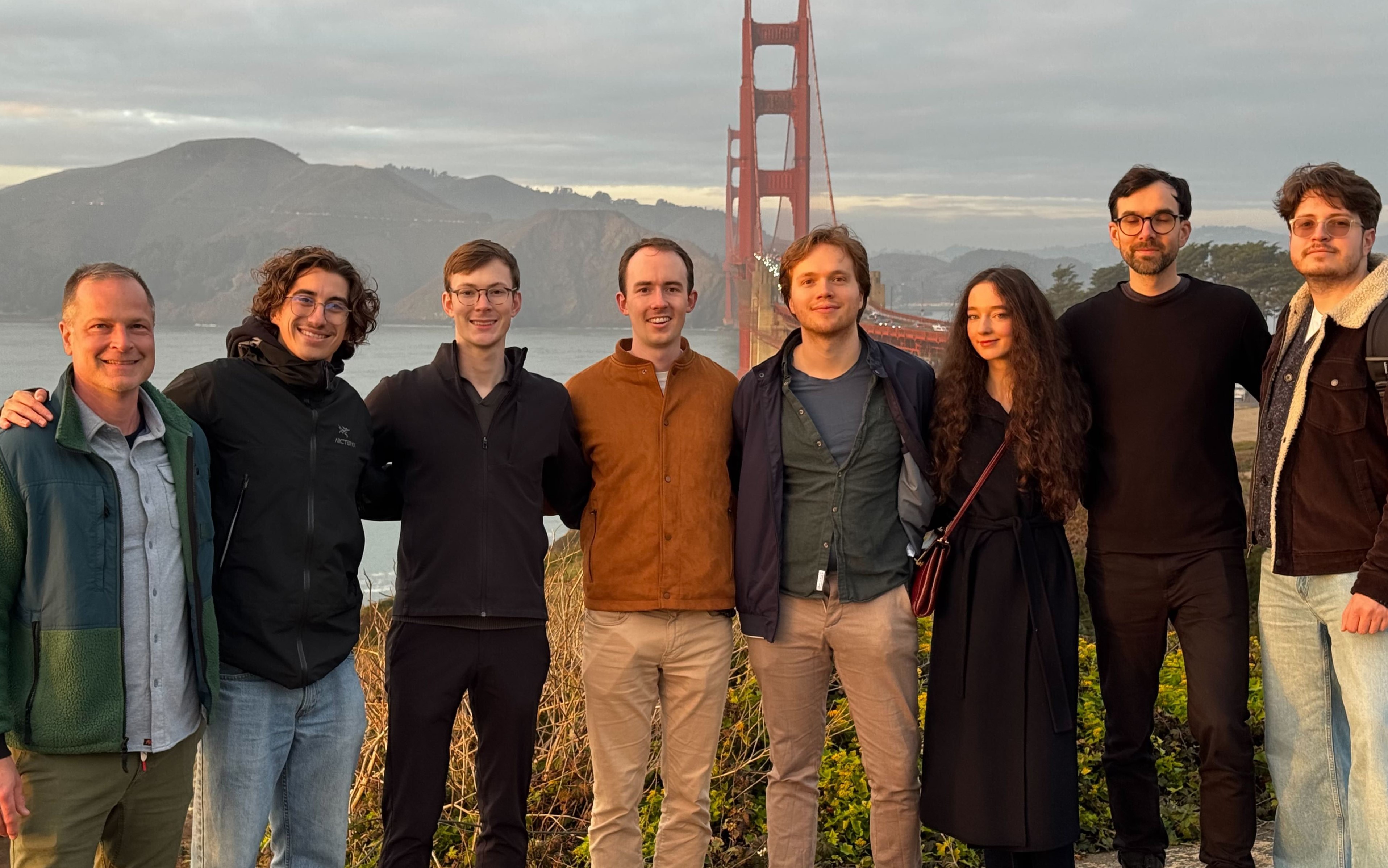
In December we flew to San Francisco to meet their engineering team - eight people building software used by millions. By the end of the week, everyone had shipped real features to production. The kind of output that would take most companies a year to build.
What comes next
Most people underestimate how much software never gets built. Teams everywhere have problems that could be solved with a custom tool - but they don't have engineers, and off-the-shelf products don't quite fit. So they make do. They use spreadsheets. They copy-paste between systems. They adapt their workflows to their tools instead of the other way around.
AI has the potential to change that completely. Not by making coding faster for developers, but by making it possible for people who don't code to build exactly what they need.
But we're not there yet. The gap between a prototype and a production system is still enormous. Generating an app is the easy part - anyone can prompt an AI and get something that looks good. The hard part is everything after: understanding what the app actually does, fixing it when something breaks, evolving it as your needs change. For non-technical users, that's where most tools fall apart.
Closing that gap - making it possible for anyone to build and maintain production-ready software, without needing to understand the code underneath - is the real opportunity. That's what we're working on now - Laura leading growth and marketing, Alrik on core engineering.
For Endeva users
If you've been using Endeva, we'd recommend moving to Zite - it has everything we were building plus more integrations, visual workflows, and a larger team shipping improvements daily. Reach out to Laura directly and we'll help you transition.
Thank you
To everyone who supported Endeva - who signed up, gave feedback, shared our launch, or simply believed in what we were building - thank you.
The vision is the same. Software should adapt to how you work, not the other way around. We're now building it as part of a team that can take it much further.
Laura and Alrik